When most people think about motorsport performance, they picture blistering lap times, fearless braking zones, and drivers threading race cars through gaps measured in inches. But behind every fast lap and every clean pit stop lies something far less visible and just as critical: cognitive performance.
Auto racing is not only a physical sport. It is a thinking sport. And not just for the driver.
From the cockpit to pit wall, motorsport is one of the most intense real-time decision environments in professional sport. Engineers are analysing live data streams. Strategists are recalculating fuel windows. Pit crews are executing complex sequences under immense pressure. Spotters scan the track for developing risks. Every role demands sustained focus, rapid decision-making, and flawless execution for hours at a time.
In this environment, cognitive performance is not an individual advantage. It is a team advantage.
A modern race weekend places extraordinary demands on cognition. Drivers process speeds exceeding 200 mph while managing braking points, tire degradation, traffic, and radio communication. Reaction times and visual processing speed are continuously tested, lap after lap.
Engineers monitor thousands of data channels in real time, identifying patterns that could predict mechanical failure or performance gains. Strategists balance risk and reward as weather changes, cautions appear, and competitors adjust their tactics. Pit crews perform highly choreographed movements where a single lapse in attention can cost positions or end a race entirely.
Everyone is operating under time pressure, fatigue, emotional stress, and the constant awareness that a small mental mistake can have outsized consequences.
This is where cognitive endurance matters.
The brain, like muscles, fatigues under load. Sustained attention, repeated decision-making, and emotional stress all tax cognitive resources. Research in cognitive neuroscience consistently shows that as mental fatigue increases, reaction time slows, accuracy declines, and decision quality deteriorates.
In motorsport, those declines do not show up as small inconveniences. They show up as missed pit windows, delayed radio calls, slow tire changes, or momentary lapses of concentration at speed.
What makes racing unique is that these cognitive demands persist over hours, not minutes. Endurance races, some as long as 24 hours, stretch mental stamina even further, requiring teams to maintain sharpness deep into the night when circadian rhythms naturally dip.
Supporting brain performance throughout these periods is not about shortcuts—it’s about resilience.
Traditional sports nutrition often focuses almost exclusively on the athlete. In motorsport, that approach misses the bigger picture.
A driver can execute perfectly, but if a strategist misjudges a fuel calculation or a pit crew member hesitates for a fraction of a second, the outcome changes. Success depends on collective clarity, not isolated brilliance.
That is why cognitive support needs to extend beyond the cockpit.
Teams increasingly recognise that nutrition, hydration, and mental readiness apply to everyone operating in high-pressure roles. Just as teams manage physical workload and recovery, cognitive workload deserves equal attention.
This is where ingredients designed to support mental performance, such as Cereboost™, become relevant.
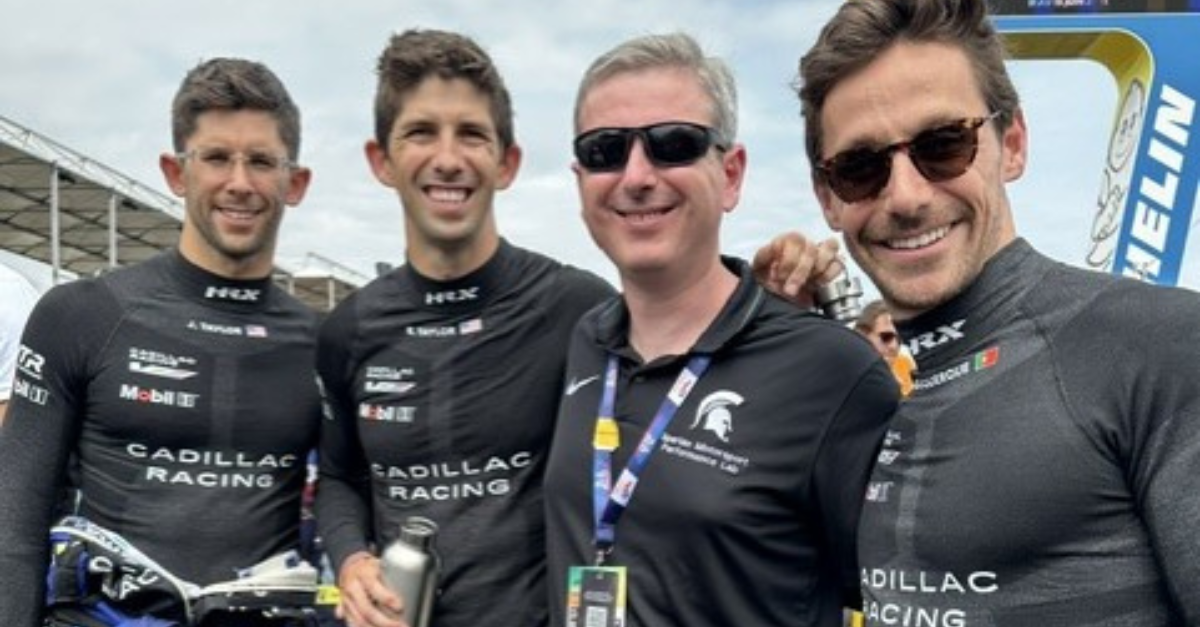
Cereboost™ is a standardized American ginseng extract studied for its ability to support cognitive performance during mental challenges. Unlike stimulants that artificially spike arousal, Cereboost™ is associated with cognitive efficiency - helping the brain focus without jitteriness or mental crashes.
In the context of motorsport, this distinction matters.
Drivers and team members need calm focus, not overstimulation. Racing environments already elevate heart rate and adrenaline. What teams require is sustained attention, faster information processing, and the ability to make sound decisions when pressure is highest.
Cereboost™ has been studied in individual subjects in challenging tasks that reflect many of the cognitive demands seen in racing, including reaction time, working memory, and decision accuracy under mental load. These are not abstract laboratory skills, they are the same capacities engineers rely on when interpreting telemetry, or pit crews depend on when executing flawless stops.
Supporting these cognitive processes doesn’t replace training, experience, or teamwork. It complements them.
One reason motorsport provides such a compelling model for cognitive science is that performance is immediately measurable. Lap times, pit stop durations, radio response speed, and error rates all translate mental performance into objective outcomes.
That real-world accountability is what makes racing a powerful environment for studying how nutritional strategies influence cognitive function. If focus wanes or reaction time slows, the data reveals it quickly.
Modern race teams are filled with cutting-edge technology, but every decision still flows through the human brain. Data doesn’t interpret itself. Sensors can’t react to unpredictable situations.
That responsibility falls to people operating under pressure.
When teams talk about gaining a competitive edge, they often focus on aerodynamics, simulation tools, or mechanical innovation. Yet cognitive sharpness, the ability to think clearly when it matters most, remains one of the few performance areas that applies universally, across every role in the garage.
Supporting that mental edge is not about turning people into machines. It’s about keeping them human at their best: alert, thoughtful, composed, and decisive.
While motorsport provides a dramatic example, the lessons extend far beyond the track.
Many consumers face similar cognitive challenges in their own lives including high-stakes decisions, long workdays, sustained focus, and pressure to perform without mistakes. Executives, surgeons, pilots, and first responders all operate in environments where mental clarity matters as much as technical skill.
Motorsport simply strips away the illusion that cognitive performance is optional. In racing, thinking clearly is performance.
That’s why ingredients like Cereboost™ resonate with consumers who are not looking for hype, but for support rooted in real-world demands. If something can hold up inside a race team operating at the limit, it earns credibility elsewhere.
Motorsport has always been a proving ground for innovation by testing technologies, strategies, and systems under conditions that leave no margin for error. Cognitive performance is emerging as the next frontier in that tradition.
The brain is not separate from performance. It is performance.
By recognising mental sharpness as a shared responsibility across drivers, engineers, pit crews, and strategists, teams unlock a holistic approach to success. Supporting cognition through training, recovery, and evidence-based nutrition adds another layer to competitive preparation.
In the end, races aren’t just won by the fastest car or the bravest driver. They’re won by teams that think clearly when everything is on the line—and that’s where brain performance truly matters.


.svg)
.svg)


.svg)
.svg)
.svg)
.svg)
.svg)